The northern line: carved chimneys and the three valleys first, then the pottery benches on the Kızılırmak. Read the shared museum clock in the morning.
Göreme, Uçhisar and Kızılçukur
Göreme, Uçhisar and Kızılçukur · 13:00–17:30 · Includes uphill stops
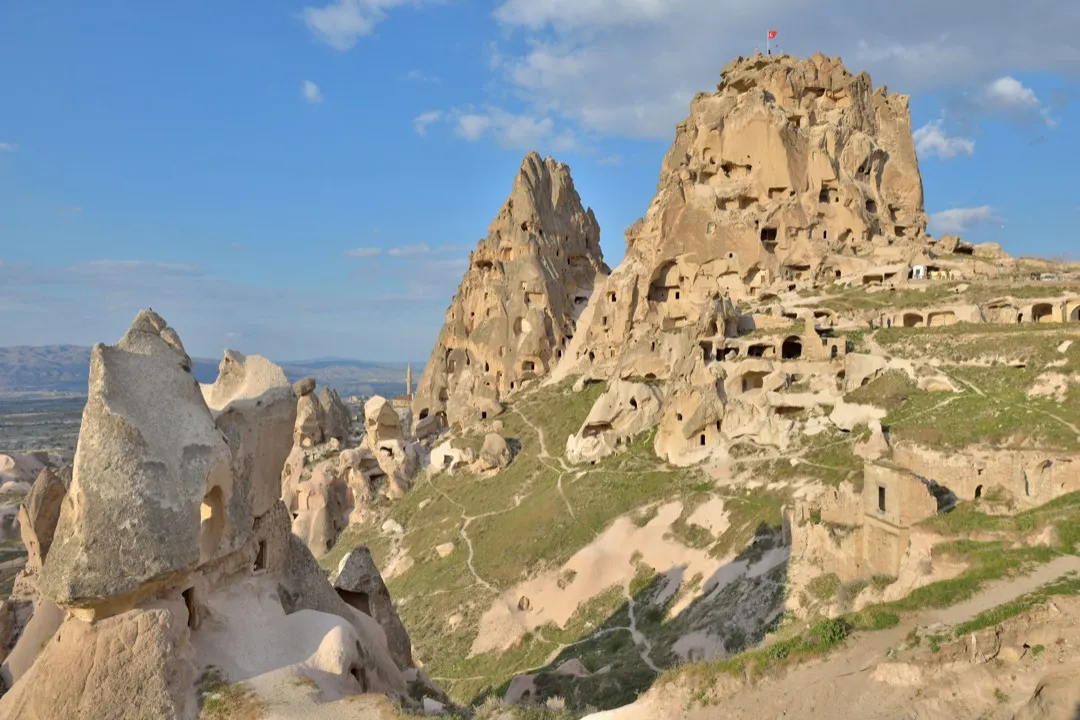
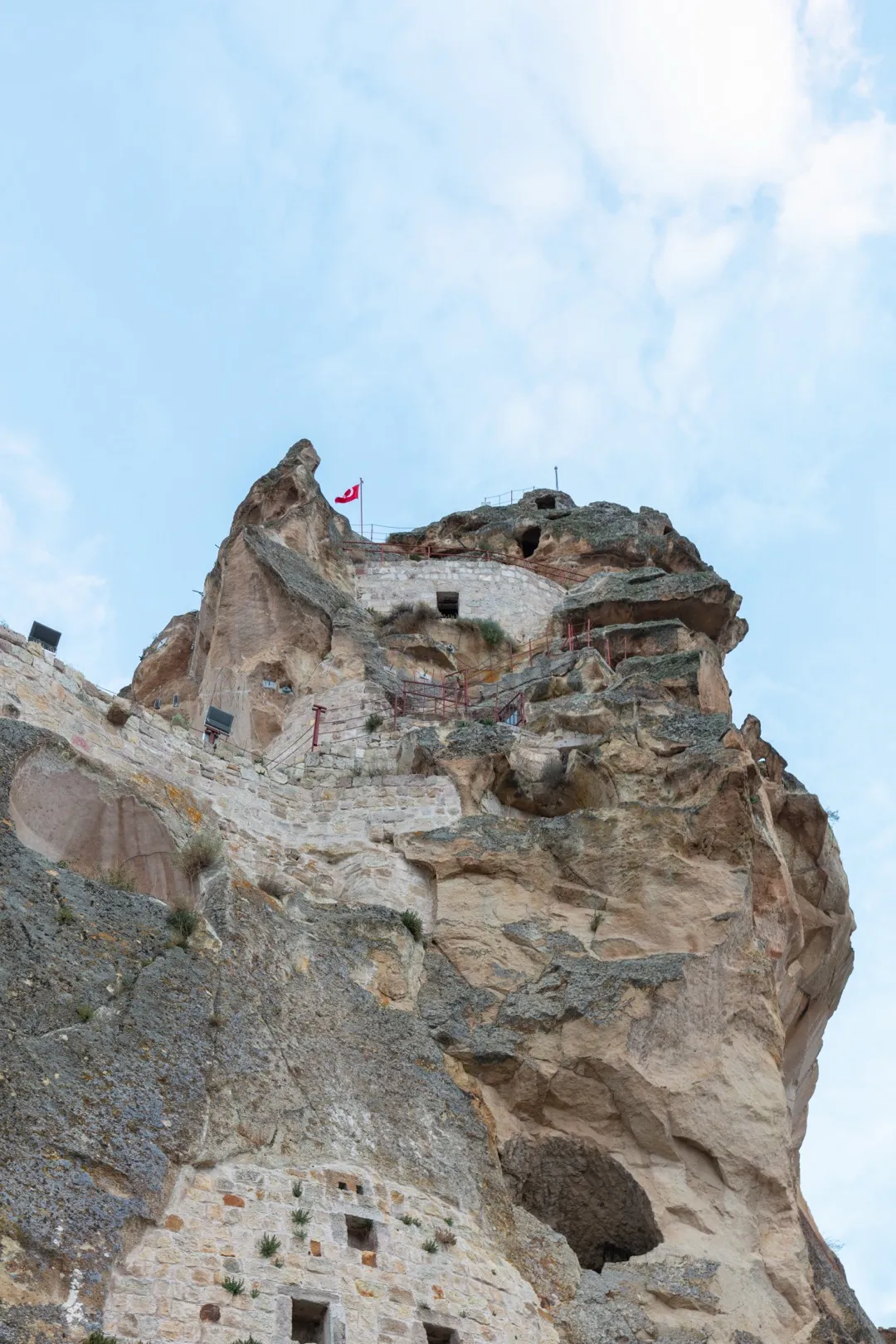
A tight day from Göreme through Paşabağ and Zelve, then south of Nevşehir to Kaymaklı, ending at Uçhisar. In winter’s early dark, read the last castle from its foot.
Evening at Ortahisar and Uçhisar
Evening at Ortahisar and Uçhisar · 18:00–19:35 · Includes uphill stops
Nevşehir Kapadokya Airport and Kayseri Erkilet connect by road to the valley towns. Göreme, Uçhisar, Ortahisar, Kızılçukur, Paşabağ and Zelve sit in one basin and are linked by car or minibus. Kaymaklı is not part of that walk; it needs a separate road south of Nevşehir. Avanos, on the Kızılırmak, is the low point of the plateau. The elevation curve is a plateau reading of separate stops, not the profile of a single path.
Where to stay
Göreme valley floor
The shortest morning start for the museum and the Kızılçukur ridge.
Uçhisar ridge
Stay near the castle foot if the evening light is the point.
Ortahisar rock houses
Carved houses woven around the tower; the summit stair is a separate question.
What to eat, when to visit
Pottery-jug kebab · The valley’s white and red wines · Beans baked in a clay pot
April–June and September–October are the comfortable months for walking the valleys. July and August middays are harsh on the pale tuff. From December through February, wet or icy wind can close Uçhisar’s upper tunnel steps and shorten the museum day. Hot-air balloon flights depend on the weather and do not replace these stops.
4 visitor tips
Fairy-Chimney Geology
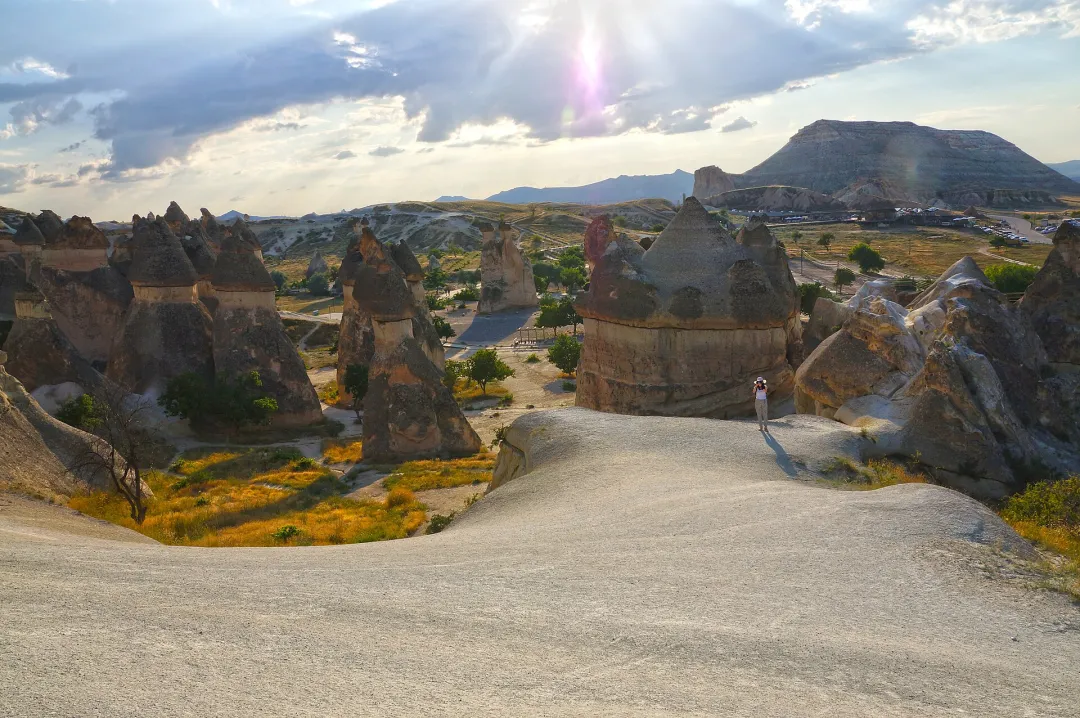
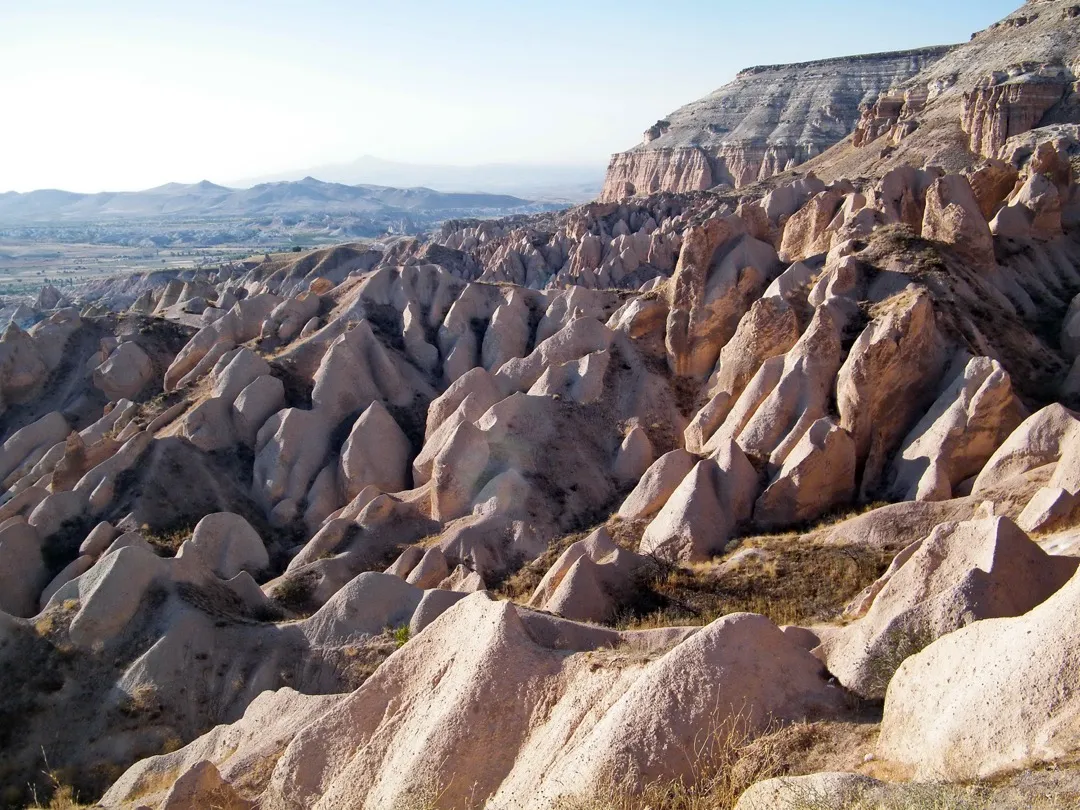
UNESCO bounds the plateau on the south and east by extinct volcanoes, Erciyes Dağı at 3916 metres at one end and Hasan Dağı at 3253 metres at the other. The same text says erosion has cut that volcanic cover into ridges, valleys and the pinnacles called fairy chimneys. The chimney shape is the ignimbrite of Erciyes and Hasan Dağı, where a harder basalt cap lets the softer tuff weather away around it.
At Paşabağ, see cap and stem together on one cone
Rock-Cut Monasteries and Fresco Heritage
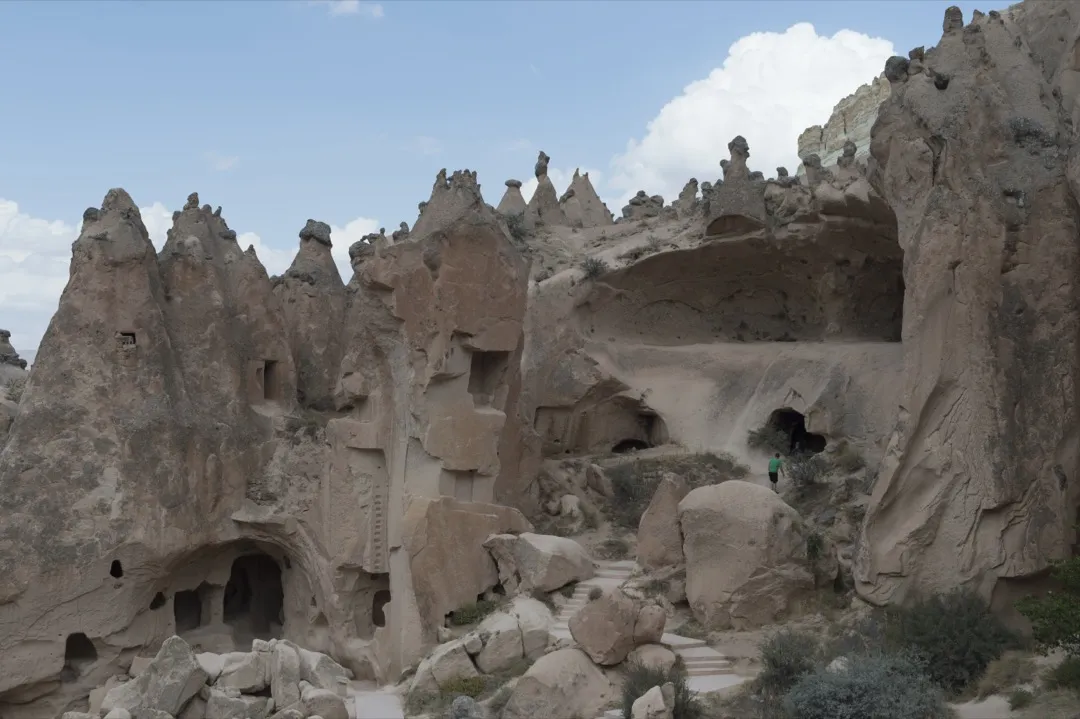
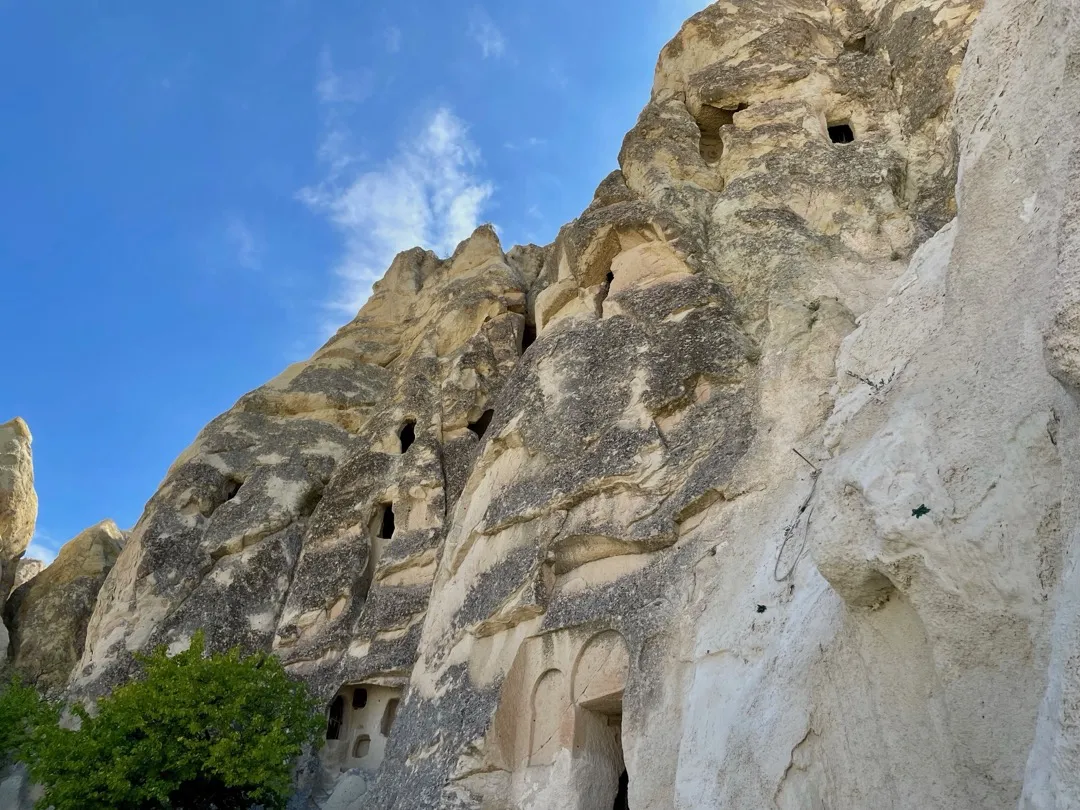
UNESCO treats the rock-cut sanctuaries as unique evidence of Byzantine art after Iconoclasm. After 842, figurative painting multiplies: in the Göreme valley Tokalı and El Nazar belong to the tenth century, Barbara and Saklı to the eleventh, and Elmalı and the Dark Church to the end of the twelfth and the start of the thirteenth. The Dark Church stands as its own section on the Göreme museum page; do not assume an ordinary pass includes it.
Give the morning to Göreme for the figurative program, and Zelve to the pigeon-house village
Underground-City Engineering
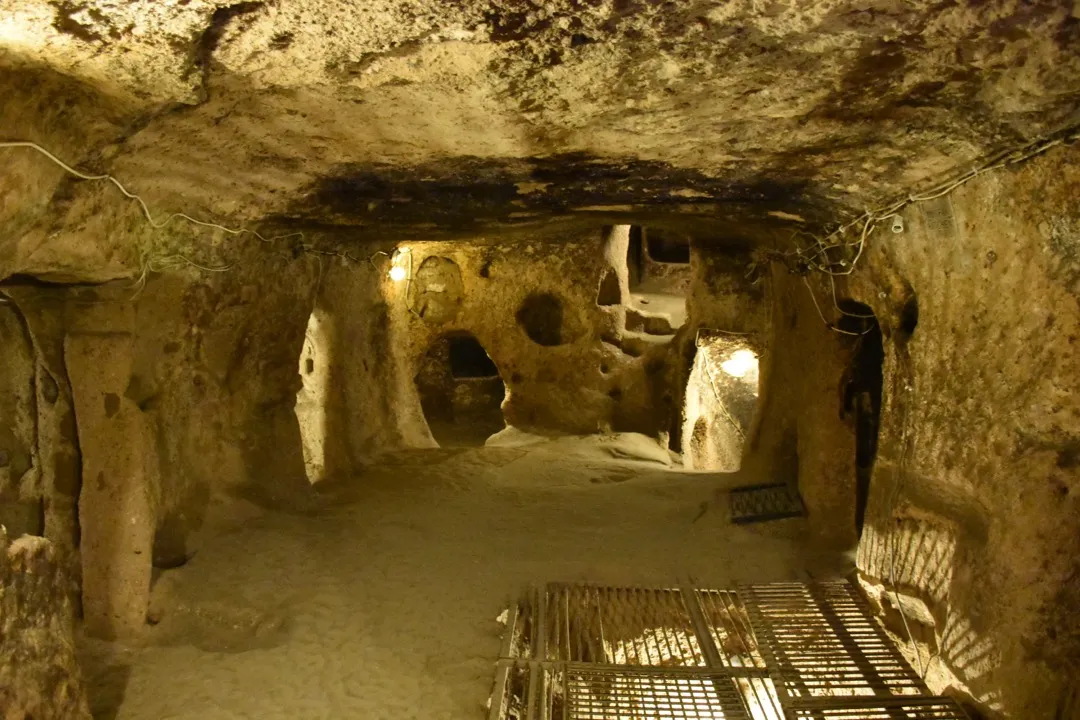
The defense logic of Cappadocia’s refuges is stacked floors around a ventilation shaft, low sloping galleries, and millstone doors rolled shut across a corridor. The Kaymaklı page clearly publishes the shafts and the four open floors, and it explains the low, narrow, sloping galleries as a way to restrict an attacker. The 57 holes on that page are not a door; they are the face of an andesite grinding stone left in place while the tuff was hollowed.
Do not add Kaymaklı to a basin walk; budget a separate car and extra time for the low ceilings
Pigeon Houses and Kızılırmak Pottery
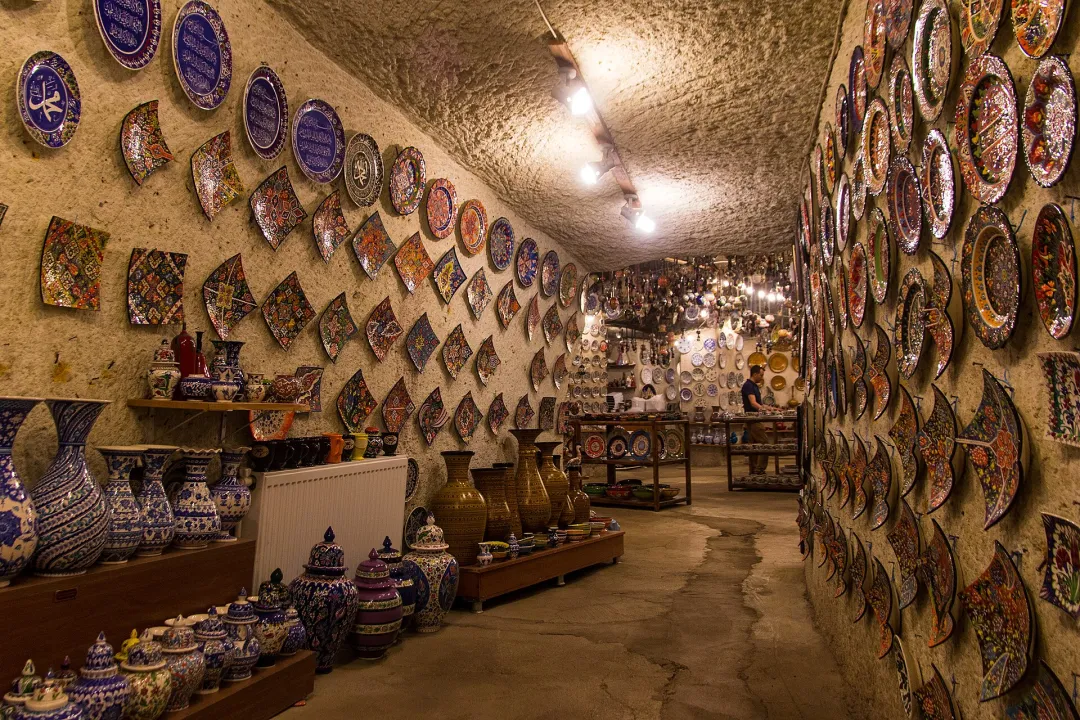
The Zelve page counts the pigeon houses carved into the high slopes at the end of the valley, and the plain decoration on their facades, as part of the site’s value. Those bird rooms are the tuff-cut store of a vineyard and orchard agriculture. The historic workshops on the Avanos bank, at the plateau’s northern edge, turn the red alluvial clay of the Kızılırmak into pots on the wheel.
Look for pigeon houses at the end of Zelve and for clay on the Avanos embankment; they are not one stop